
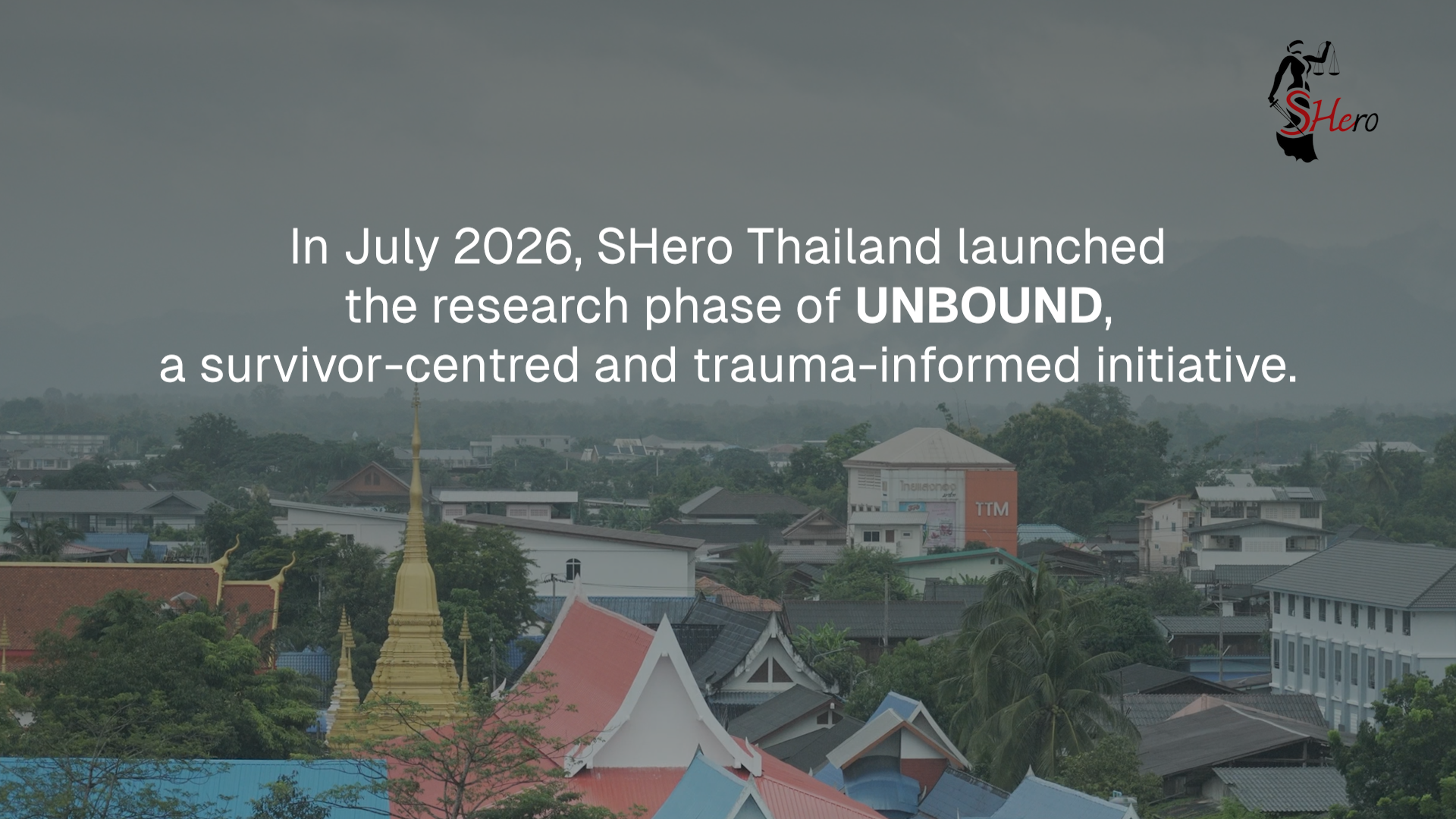
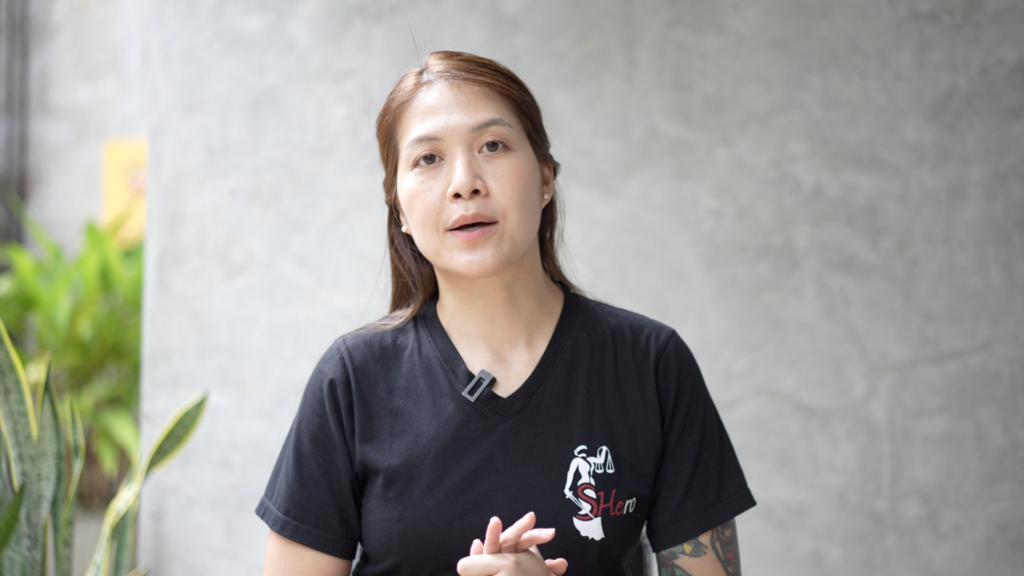
Interview with: “Best” Busayapa Srisompong, human rights lawyer, gender-based violence specialist, and founder of the Foundation for Gender Justice (SHero Thailand).
ㅤㅤㅤㅤㅤㅤㅤㅤㅤㅤㅤㅤㅤㅤㅤ
Domestic violence and intimate partner violence statistics collected by government agencies each year represent merely the “tip of the iceberg”.
The majority of survivors’ stories remain submerged—uncounted, unheard, and unused to drive policy change as they ought to be.
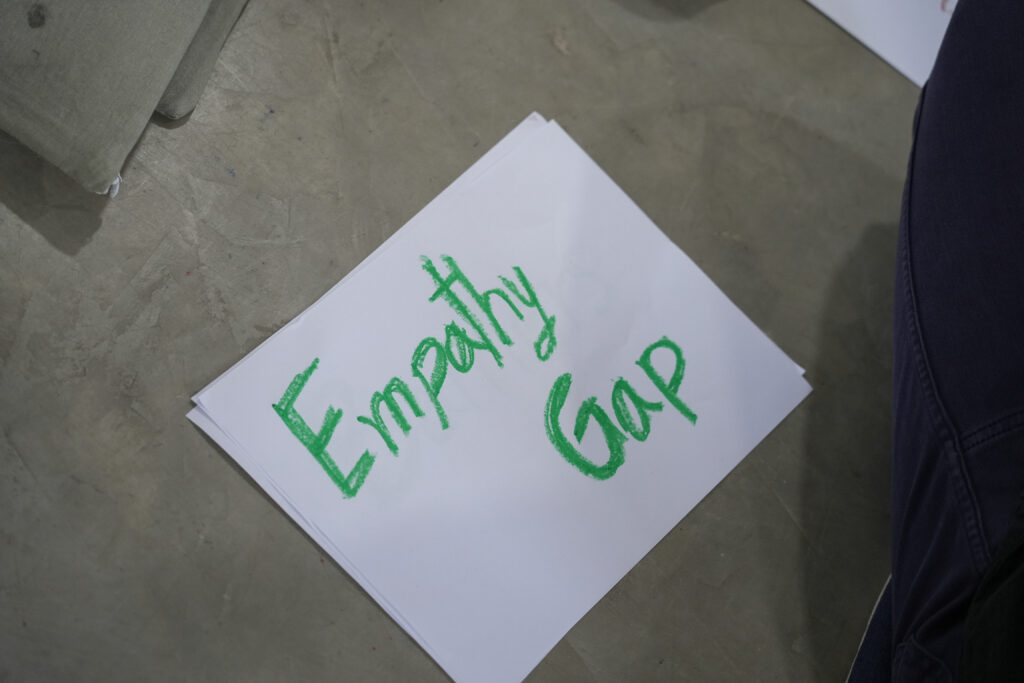
This is the gap that UNBOUND, a qualitative research project by SHero Thailand, identifies and seeks to transform. By bringing the voices and direct experiences of survivors of intimate partner violence (IPV) and domestic violence into academic evidence, the project aims to drive the reform of Thailand’s laws and justice system.
The objectives of UNBOUND are to understand survivors’ experiences of Thailand’s justice and protection systems, including how these systems perpetrate secondary victimisation. Furthermore, this research aims to highlight that much intimate partner violence is not a single isolated incident, but is instead grounded in a continuing pattern of coercive control within the relationship. Consequently, establishing an empirical database on this matter is another key objective that will lead to reform proposals grounded in the voices and experiences of survivors, fostering a justice system that genuinely centres survivors’ voices.
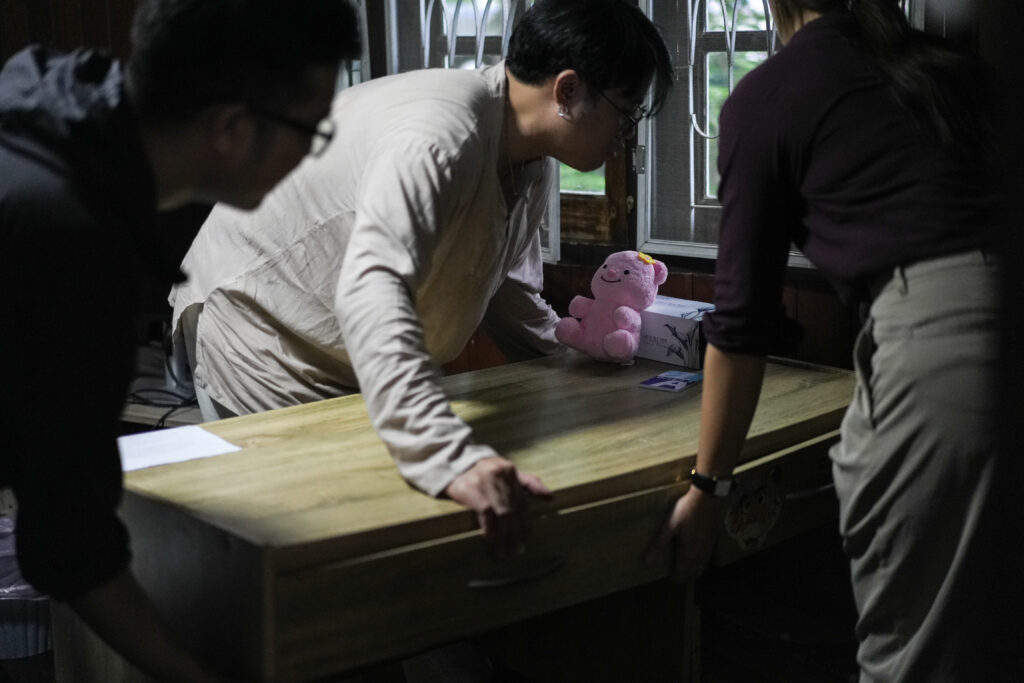
Moreover, to ensure the research process does not inflict re-traumatisation, the research team adheres to trauma-informed and survivor-centred approaches throughout every stage of the interview process. This ranges from formulating interview questions and selecting interviewers to attending to details often overlooked, such as the placement of a tissue box in the interview room. Designed and conducted collaboratively by a multidisciplinary team comprising lawyers, social workers, psychologists, and others, the drawing upon each profession’s expertise enables the team to perceive survivors’ experiences from diverse perspectives, rendering the interviews comprehensive.
This same comprehensiveness is reflected in the selection of research locations, as violence does not manifest in the identical context everywhere. The project conducts fieldwork across Bangkok, the Isan region, the Northern region, the Southern region, and border areas such as Mae Sot district in Tak province. This area is uniquely complex due to the overlapping issues of migrant workers, stateless persons, and displaced persons. This regional diversity will help demonstrate how gender, legal and economic status, and geographical factors affect survivors’ access to justice.
ㅤㅤㅤㅤㅤㅤㅤㅤㅤㅤㅤㅤㅤㅤㅤ
ㅤㅤㅤㅤㅤㅤㅤㅤㅤㅤㅤㅤㅤㅤㅤ
The project is entitled UNBOUND. It integrates survivor voices into policy advocacy. For several years, alongside providing legal aid, we have increasingly engaged in policy advocacy alongside our networks. We have found that whenever we attempt to explain the patterns of violence, we are repeatedly asked for statistics or academic research. Yet when discussing violence—particularly domestic violence and intimate partner violence—it is exceedingly difficult to aggregate every case into statistics. The statistics we observe, even those from the state, represent merely the “tip of the iceberg” and fail to represent actual stories and phenomena.
We recognise the importance of demonstrating that domestic violence is not merely assault committed in a fit of sudden passion, nor is it an incident occurring between two individuals of equal power.
We wish to capture patterns that possess their own terminology, such as “power and control”—phenomena that the state and law enforcement officers frequently fail to perceive. Drawing upon our experience assisting survivors and our network’s accumulated experience of nearly a thousand cases involving domestic violence and intimate partner violence, we concluded that conducting research grounded in the voices and experiences of survivors is paramount. Thus, UNBOUND was conceived.
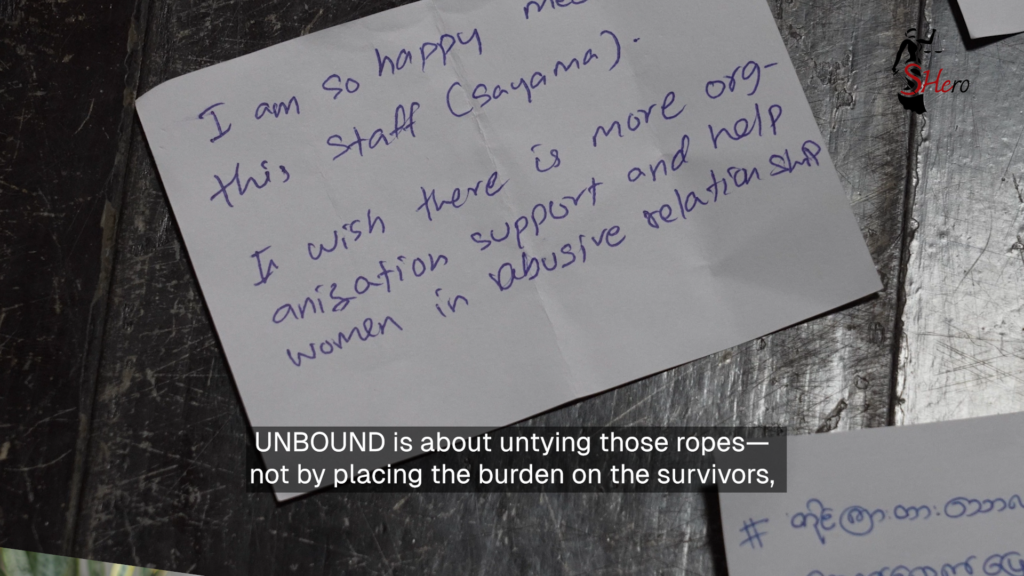
The title UNBOUND derives from the imagery of individuals trapped in intimate partner violence, akin to being bound by invisible ropes that prevent them from escaping. UNBOUND represents our efforts to untangle these ropes for them, without shifting the burden onto the survivors, but instead compelling the state to recognise the ropes harming them and assist in untangling them.
Intimate partner violence remains insufficiently acknowledged by the Thai state. The Domestic Violence Victim Protection Act, upon which we work, remains premised fundamentally upon preserving the status of the family unit. This contradicts international standards and conventions to which Thailand is a party, such as the Convention on the Elimination of All Forms of Discrimination Against Women (CEDAW). In truth, addressing this issue must prioritise the welfare and safety of the victim—which constitutes the survivor-centred approach.
We hope this project will compel the state to take notice by conveying the life experiences of survivors.
While we may not be the first to conduct research concerning survivors, we are likely among the first to do so adhering strictly to trauma-informed principles, genuinely respecting the agency and decision-making power of survivors, and meticulously planning how to conduct this study safely.
This work will not be academic research left gathering dust on a shelf; rather, it will comprise findings utilised to drive genuine policy change and legal reform.
At SHero, we have had the opportunity to provide training to state officials, including multidisciplinary teams, inquiry officials, police officers, and justice system personnel, alongside hosting forums and seminars with the judiciary. We are engaging with personnel who directly impact survivors across various levels. If we possess examples that transcend mere case studies and serve as practical tools encompassing skills, knowledge, and attitudes, we can enable officials to look beyond individual training sessions and understand what a genuinely safe process for victims entails, derived authentically from survivors’ lived experiences.
First, every team member must be cognizant of factors that might re-traumatise survivors during data collection, such as an interviewer’s tone of voice or gender identity, which could trigger a survivor. We assess whether to reassign the interviewer; however, if a survivor explicitly requests to speak with their familiar service provider, we honour their autonomy and decision-making power. This principle aligns directly with the survivor-centred approach.
ㅤㅤㅤㅤㅤㅤㅤㅤㅤㅤㅤㅤㅤㅤㅤ
ㅤㅤㅤㅤㅤㅤㅤㅤㅤㅤㅤㅤㅤㅤㅤ
In all our actions, we focus not merely on satisfying readers’ interests or policy agendas, but on placing the welfare and safety of research participants as the absolute priority.
Survivors retain 100% autonomy to decline or withdraw their participation at any stage.
Even after an interview concludes, participants may inform the team at any time. Periodic feedback checks are conducted following interviews to ensure survivors are confident they are supported by the team. The project design adapts to the context of each locality; for instance, where participants may lack smartphones or email access, alternative accessible communication channels are provided, alongside a designated focal point dedicated specifically to mental well-being care.
Data protection constitutes another paramount principle.
Informed consent must be genuinely voluntary; thus, coercion is strictly absent. The team refrains entirely from photographing or filming survivors; documentation is restricted to recording team working processes. Audio recordings are deleted immediately upon transcription, and physical documents are destroyed upon project completion, as certain interconnected data might risk identification.
Consequently, we must continually review our practices. Every team member must understand confidentiality and the management of conflicts of interest.
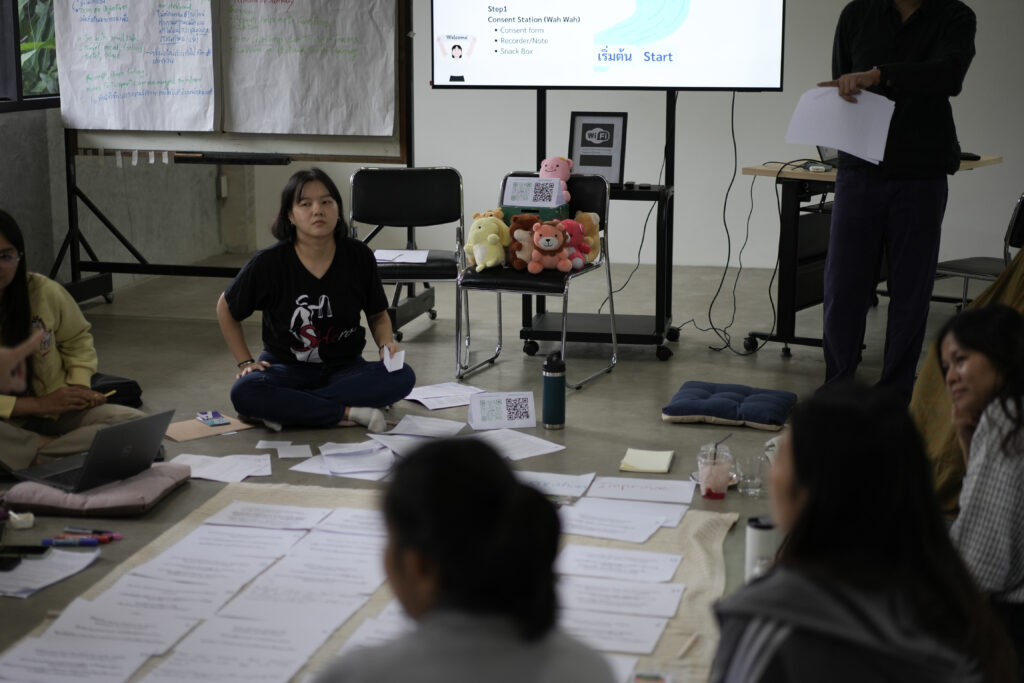
The UNBOUND research team operates as a multidisciplinary unit comprising lawyers, legal scholars, human rights advocates, individuals with years of borderland refugee work experience, social workers, and psychologists. We consistently apply a multidisciplinary approach, discussing minute details—such as the optimal placement of a tissue box or how furrowing one’s brow while listening intently might cause an interviewee discomfort. Psychologists and support teams stand ready following interviews in case of triggering. Researchers themselves undergo basic grounding training, and interviewers must prepare prior to listening to distressing accounts, carefully planning each day to prevent the team from bearing excessive emotional burdens.
ㅤㅤㅤㅤㅤㅤㅤㅤㅤㅤㅤㅤㅤㅤㅤ
ㅤㅤㅤㅤㅤㅤㅤㅤㅤㅤㅤㅤㅤㅤㅤ
A multidisciplinary approach fosters diverse perspectives. Social workers, psychologists, lawyers, researchers, and community workers each observe through distinct lenses. Most importantly, mutual respect and self-reflection are vital. The team continually emphasises that everyone possesses biases, and it is incumbent upon colleagues to provide reminders without fear regarding gender or other biases. Acknowledging our potential biases serves as the starting point for examining and understanding our shared humanity as researchers.
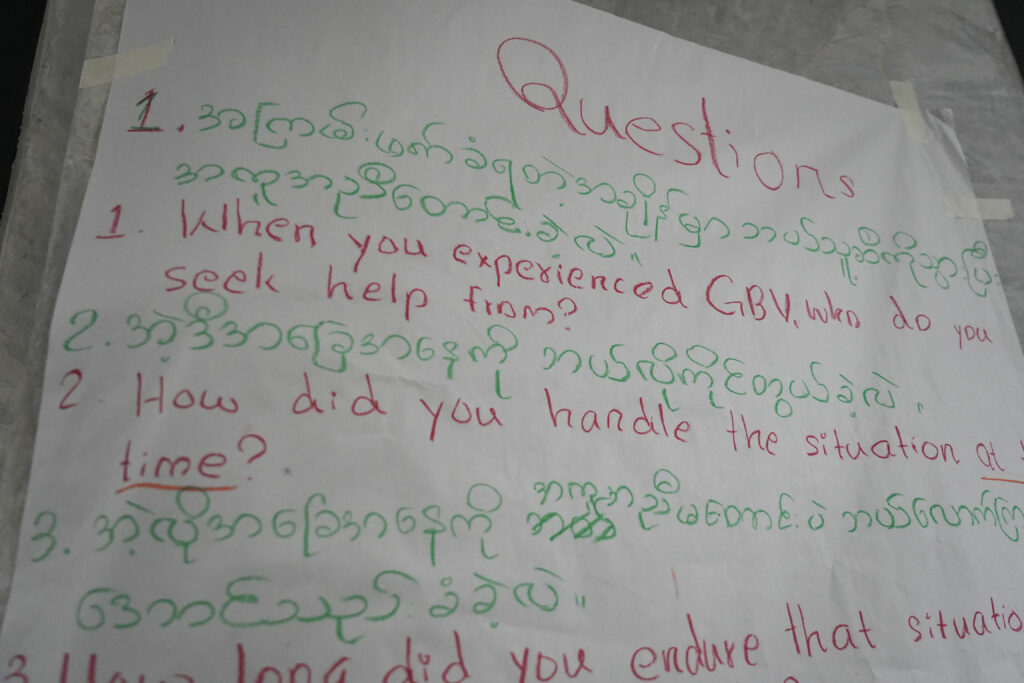
The project pursues core research questions that remain adaptable to circumstances. Primarily, we seek to understand the experiences of survivors of intimate partner violence—both those who have accessed protection or justice systems and those who have not—regarding their encounters with the justice system, or conversely, the factors compelling them to avoid it.
Interviews refrain from probing details of the violence, such as specific injuries inflicted, the precise nature of the abuse, or emotional states. Instead, interviews focus on what enabled the individual to feel sufficiently safe to seek assistance from community centres or anyone within the system—whether police, social welfare, or public health officials. Identifying what instils a sense that “this will help me move forward” represents what the project seeks to uncover, serving as a catalyst for systemic reform in Thailand.
Being qualitative research, the project does not aim to interview every individual. We select locations where the core research team thoroughly understands local contexts and conditions. This ensures we can invite survivors without persuasion or coercion, whilst fully respecting the autonomy of survivors and gatekeepers.
The primary location is Bangkok, serving as a hub for cases and practitioners. Additionally, target regional areas comprise two to three provinces in the Isan region (such as Ubon Ratchathani and Si Sa Ket), the Northern region, the Western region (specifically Mae Sot district in Tak province), and the Southern region (including Nakhon Si Thammarat, among others).
The team accesses regions via local organisations already active in these issues, with SHero personnel serving as primary interviewers. However, should survivors express a preference for familiar interviewers, training and oversight are provided to ensure interviewers comprehend trauma-informed principles and exercise sensitivity throughout the process.
A persistent advocacy focus of SHero involves migrant workers, displaced persons, stateless individuals, and undocumented women, all of whom face heightened vulnerability to various forms of intimate partner violence and gender-based violence, yet lack clear legal frameworks guaranteeing safe access to the justice system.
Addressing this solely through a security lens proves inadequate; ultimately, if perpetrators remain criminals generating insecurity within communities, they pose a threat to anyone. Protecting all nationalities within Thailand genuinely enhances national security for everyone, not merely select groups. In contrast to human trafficking laws which possess clear mechanisms and protective frameworks, gender-based violence—particularly domestic violence—is frequently dismissed as trivial.
ㅤㅤㅤㅤㅤㅤㅤㅤㅤㅤㅤㅤㅤㅤㅤ
ㅤㅤㅤㅤㅤㅤㅤㅤㅤㅤㅤㅤㅤㅤㅤ
Recently, SHero leveraged international mechanisms under the Convention on the Elimination of All Forms of Discrimination Against Women (CEDAW) to advocate regarding survivors experiencing intersecting identities—such as displaced persons, stateless individuals, and those excluded by systemic flaws—who face heightened risks of discrimination and exclusion. Given SHero’s expertise and experience operating within complex environments like Mae Sot, conducting interviews with multiply-marginalised survivors is crucial to bridging gaps in justice access.
Mae Sot presents overlapping crises—not solely Mae Sot district, but all border districts in Tak province. As a special economic zone, Mae Sot attracts investors and migrant workers, whilst experiencing escalated xenophobia in recent years, driven partly by border situations and unrest. Moreover, many overlook the reality that Thailand’s economy has long relied on migrant labour. Mae Sot encompasses diverse ethnic groups and displaced persons fleeing unrest in Myanmar, some residing long-term while others remain undocumented due to administrative gaps.
Comprehending solutions within complex environments like Mae Sot will facilitate addressing other border regions in Thailand sustainably.
At SHero, both the founder and the majority of team volunteers are themselves survivors who have personally witnessed the limitations of conventional research methodologies.
Since its inception, SHero has consistently prioritised survivor welfare, safety, and respect for human dignity. This contrasts with certain entities conducting research on survivors without genuine respect for human dignity, resulting in data collection that serves the researchers’ interests rather than the survivors’.
Previously, SHero established an independent ethics committee specifically for this project, comprising survivors and experts. One committee member, herself a survivor interviewed numerous times over decades, remarked to Best:
“This is the first place I have seen such meticulously sensitive research design.”
Furthermore, SHero currently serves among the core teams drafting the people’s draft of the Domestic Violence Victim Protection Act, destined for parliamentary deliberation. Previously, the network collaborated in dialogues with state agencies and the Office of the Council of State.
ㅤㅤㅤㅤㅤㅤㅤㅤㅤㅤㅤㅤㅤㅤㅤ
ㅤㅤㅤㅤㅤㅤㅤㅤㅤㅤㅤㅤㅤㅤㅤ
For Best, the driving motivation is challenge. When engaging legislative drafters detached from lived realities, inquiries frequently question the evidence supporting our assertions. Best consistently responds that our knowledge stems from direct case experience, and we now seek academic evidence to substantiate these claims.
Best perceives that given SHero’s position providing access to legislative designers and policy advocacy channels, declining to undertake this role risks exposing survivors to greater hazards. Executing the work directly enables our team to learn alongside the process.
Thailand currently navigates a critical juncture, witnessing concurrent drafting of the Domestic Violence Victim Protection Act, revisions to penal and criminal procedure laws concerning sexual offences, and upcoming legislation addressing child grooming.
We intend for academic evidence rooted in survivors’ lived experiences to inform policy formulation and practical implementation mechanisms.
Enacting statutory legislation does not signify the conclusion of the matter; continuous monitoring is essential to evaluate practical enforcement, resource allocation for frontline state officials, and to prevent the arbitrary exercise of state power—a recurring hardship experienced by numerous survivors.
Furthermore, we hope to establish toolkits enabling practitioners to execute survivor support grounded truly in trauma-informed and survivor-centred practices.
Following initial data collection, the team will pilot toolkits with champion cohorts among multidisciplinary practitioners, such as prosecutors and inquiry officials, evaluating suitability, co-designing adjustments, and verifying practical viability and resource adequacy.
Additionally, we are formulating the SHero Methodology through this project—establishing a safe, ethical qualitative research framework referencing guidelines by organisations such as UN Women regarding safe, ethical interviews with survivors of violence, tailored to the Thai context. SHero will draw lessons from this project to demonstrate genuine collaborative research with participants.
Beyond collaborating with justice system personnel, UNBOUND produces media and content to foster societal understanding of survivors, mitigating victim-blaming and stigmatisation.
We aim to dismantle these misconceptions utilising authentic narratives derived from SHero’s fieldwork. Beyond reforming justice systems or protection mechanisms, we aspire to overturn erroneous traditional Thai societal attitudes concerning gender-based violence, particularly domestic violence.
Cease dismissing it as trivial, comedic, or merely a “private family matter”, and halt victim-blaming. Understand at last that the assertion “Just leave, and it’s over” is false; countless invisible ropes bind survivors, preventing departure, and addressing this is the collective responsibility of everyone in society.
Many of us harbour painful experiences in one form or another—whether at home, school, or within families. We hope this work brings these struggles to a resolution within our generation.
ㅤㅤㅤㅤㅤㅤㅤㅤㅤㅤㅤㅤㅤㅤㅤ
ㅤㅤㅤㅤㅤㅤㅤㅤㅤㅤㅤㅤㅤㅤ
Watch the interview and documentary “UNBOUND: Embedding Survivor Voices in Law and Practice to Advance Survivor-Centred Justice (2026)” today, and stay tuned for the compelling behind-the-scenes stories in our upcoming episode, Behind the scene UNBOUND.
Follow us on sherothailand.org and across all social media channels @sherothailand.