
ㅤㅤㅤㅤㅤㅤㅤㅤㅤㅤㅤㅤㅤㅤㅤㅤㅤㅤㅤㅤㅤㅤㅤㅤ
In the Thai context, these conclusions underscore that reforming domestic violence laws is not merely an “option” but an obligation under international standards. This requires shifting the systemic mindset away from prioritising family reconciliation at the expense of individual safety.
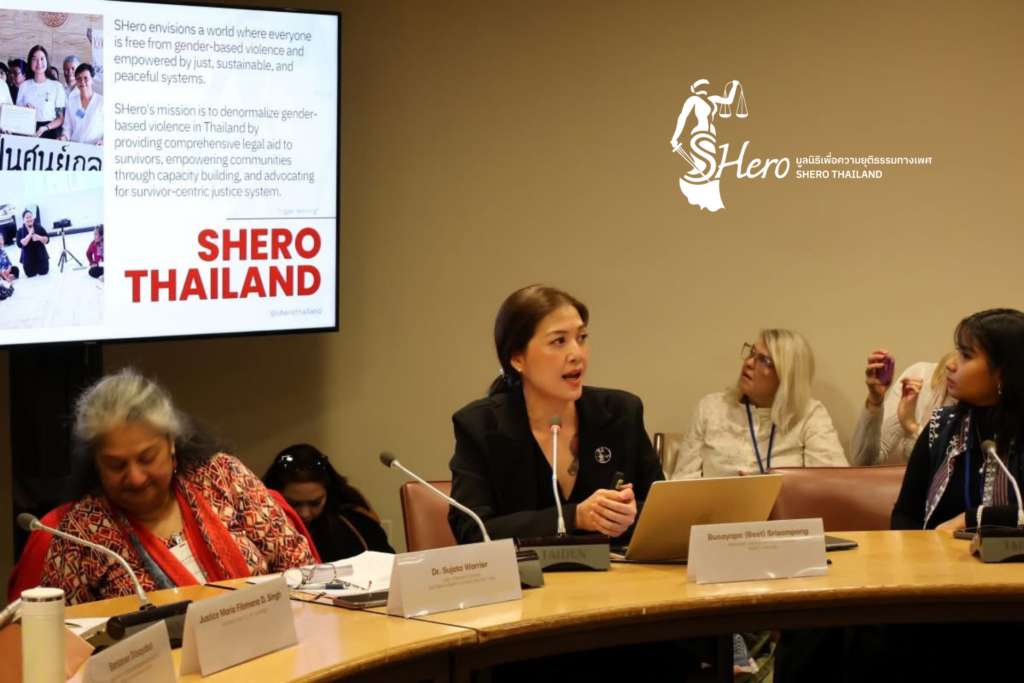
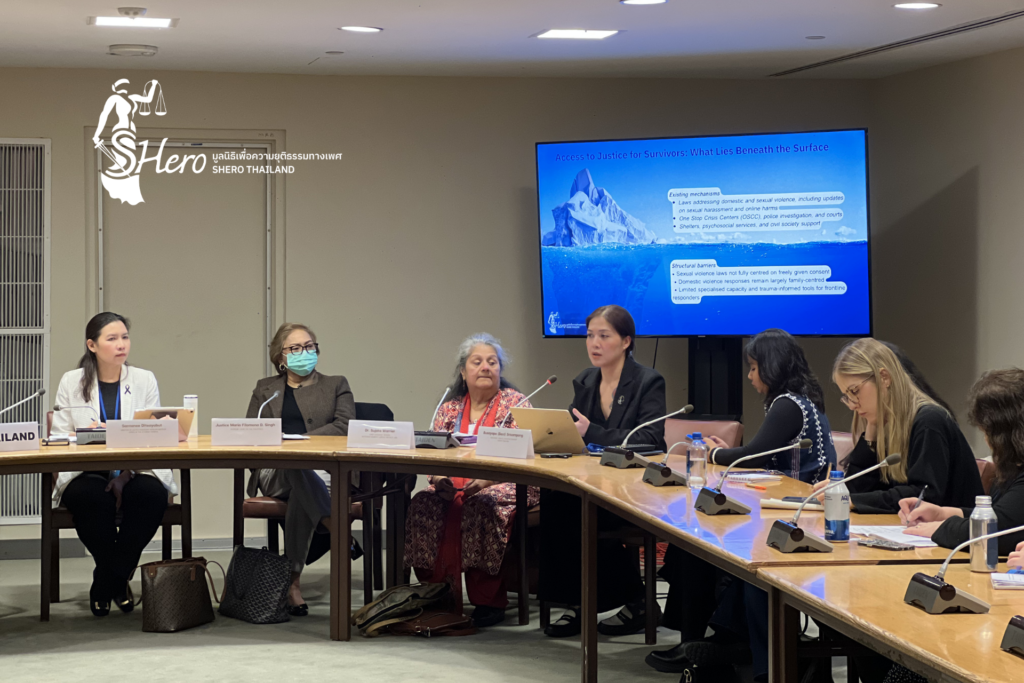
…If we compare it to an iceberg, on the surface Thailand appears to already have good justice — meaning we have laws on gender-based violence, such as the law protecting victims of domestic violence; most recently, the law has been amended to include a definition of sexual harassment; and we are in the process of amending the Criminal Code to cover gender-based violence occurring in online spaces, including sextortion, cyberstalking, and so on.
However, beneath the iceberg, there are many problems that obstruct women’s access to justice and their right to live safely. The approach of emphasising mediation and family reconciliation remains in place, without placing primary regard on the rights, welfare, and safety of survivors. We still lack sufficient tools and resources for practitioners — whether in the justice, social, or public health sectors — to be able to go in and protect against and prevent the violence that occurs. A single social worker still has to manage thousands of cases. Therefore, if we have laws only on paper but lack the mechanisms, the tools, and state investment, none of it serves any purpose whatsoever.- Busayapa Srisompong, Founder and Director of SHero Thailand
CEDAW Concluding observations on the eighth periodic report of Thailand: https://docs.un.org/en/CEDAW/C/THA/CO/8
ㅤㅤㅤㅤㅤㅤㅤㅤㅤㅤㅤㅤㅤㅤㅤㅤㅤㅤㅤㅤㅤㅤㅤㅤ
Note on terminology: In this event, the term “victim” is used in line with legal terminology commonly applied in criminal justice systems and international legal frameworks. In SHero’s work, we more often use the term “survivor” to recognize dignity, agency, and resilience. Both terms are used respectfully and in good faith.
ㅤㅤㅤㅤㅤㅤㅤㅤㅤㅤㅤㅤㅤㅤㅤㅤㅤㅤㅤㅤㅤㅤㅤㅤ