
Warning: Contains content related to gender-based violence.
Under patriarchal systems which establish male dominance over other genders, gender inequality manifests in multiple dimensions, including the economic, political, and educational spheres, as well as through domestic violence. This includes the enforcement of stereotyped gender roles, which dictate that women, in their capacity as daughters or wives, must submerge their autonomy to men as heads of households. Thailand remains one of the societies that inherits these traditions to this day, despite legal guarantees of gender equality.
The perception of women as male property is by no means a novel phenomenon in Thai society; conversely, it has been normalised. Whilst this perspective may appear benign on the surface, it serves as a critical catalyst for lethal violence. When women or girls challenge or step outside the boundaries prescribed by patriarchal structures, various forms of violence are triggered, escalating from physical and psychological abuse to murder. When men are socialised under patriarchal ideology over a prolonged period, masculinity can become toxic (Toxic Masculinity), fostering the dangerous belief that they possess the entitlement to inflict any act upon those deemed subordinate, including the deployment of violence against women.
Furthermore, the causes of these killings can be analysed through distinct psychological and sociological lenses. This includes misogynistic killings, such as the harrowing tragedy in Montreal, Canada, in 1989, where the perpetrator explicitly targeted women and those he perceived to be feminists. This reflected a stereotyped myth that equated womanhood with feminism. In Thailand, violence of this nature has manifested in mass shootings, such as the Siam Paragon shooting in late 2023, where six of the seven fatalities were women.
Moreover, femicide can arise from intersecting factors. From the perspective of intersectionality theory, an individual’s overlapping identities can shape the gendered context and generate specific modes of violence. Examples include racist femicide (the killing of Black women), homophobic femicide (the killing of lesbians), and transphobic femicide (the killing of trans women), as well as female infanticide or sex-selective abortion driven by son preference, which can also be interpreted as forms of femicide (Radford, 1992a, p. 7).
The diversity of these motivations confirms that the oppression of women and girls does not operate on the axis of gender alone, but intersects with racism, homophobia, and transphobia. Consequently, any examination of the factors surrounding femicide cannot focus solely on a single dimension of gender identity; rather, it must account for the complex web of discrimination across all dimensions that women and girls endure within society.

The History of the Term “Femicide”
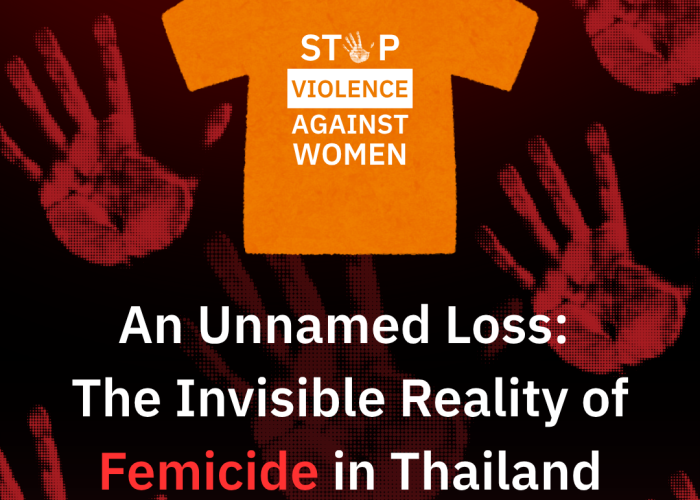
The term “Femicide” was first coined in 1976 by Diana Russell with the explicit intention of raising public awareness regarding the deaths of women directly linked to gendered contexts. Russell sought to bring specificity to this phenomenon, distinguishing it from the gender-neutral term “homicide,” which fails to capture the true underlying causes. When a woman is killed because she is a woman, the generic term “homicide” is inadequate in conveying the full spectrum of gender-based violence, as it assigns no weight to gender-motivated intentions. Consequently, Russell posited that creating a specific nomenclature distinct from homicide serves as a vital strategy in mobilising against such violence, as it renders both the targeted group and the unique nature of the violence visible.
Femicide often constitutes the ultimate culmination of a continuum of gender-based violence accumulated within a relationship, ranging from physical assault to emotional abuse. In 2022, approximately 48,800 women and girls worldwide were intentionally killed by intimate partners or other family members. Crucially, this statistic does not preclude other circumstances, as femicide can also be perpetrated by strangers. Based on these global estimates, it means that, on average, more than 133 women and girls are killed by their partners or family members “every single day” (UNODC, 2022). Furthermore, statistical data reveals that Africa possesses the highest rate of femicide globally, followed by Asia, the Americas, Europe, and Oceania, respectively (UNODC, 2022).
Global Case Studies of Femicide:
Africa
America
Europe
Asia
A young woman in Delhi was strangled and her body dismembered by the partner with whom she cohabited. Her dismembered remains were scattered across the capital city by his hands. This horrific incident occurred shortly after the murder of a 19-year-old girl in Jharkhand, who was burned to death in her bed by a stalker. These tragedies have brought immense grief and ignited widespread street protests.
“Thailand is no exception, grappling with gender-based violence in much the same manner as other nations. According to a report by the Department of Women’s Affairs and Family Development, Ministry of Social Development and Human Security, during the first quarter of 2022, incidents of domestic violence soared to 667 cases—marking the highest increase in five years, —with females comprising 81.9% of the victims. This figure excludes undocumented data or instances where women refrained from disclosing the abuse, which ultimately culminates in injuries, self-harm, suicide, and fatalities.”
Despite relentless efforts from various sectors to highlight the critical urgency of this gender-based violence, it remains undeniable that femicide continues to be rendered invisible within Thailand’s patriarchal society. In other words, the killing of women and girls is still framed merely as gender-neutral homicide, utterly failing to address the root issue: that this is the most severe manifestation of gender-based violence. If society at large fails to dismantle pervasive mythological barriers—such as de facto gender inequality and stereotyped gender roles entrenched across the region—these biases will continue to obscure reality, blinding the public to the true gravity of this violence that continues to escalate in silence.
Women and girls possess an inalienable, fundamental right to life and personal safety. Consequently, the state bears a paramount duty to collaborate with all sectors—at international, local, and public-private-civil society partnership levels—to instigate transformation from the grassroots up to the policy level, ensuring that everyone can live in a society that is safe and free from fear.
Fostering comprehension and awareness of each distinct form of gender-based violence is a critical starting point for change. SHero Thailand invites you all to join us in disseminating knowledge on this critical issue, so that the culture of violence may end with our generation. In tandem with our educational advocacy, SHero Thailand is fully committed to mobilising legal consultation and support for survivors of gender-based violence.
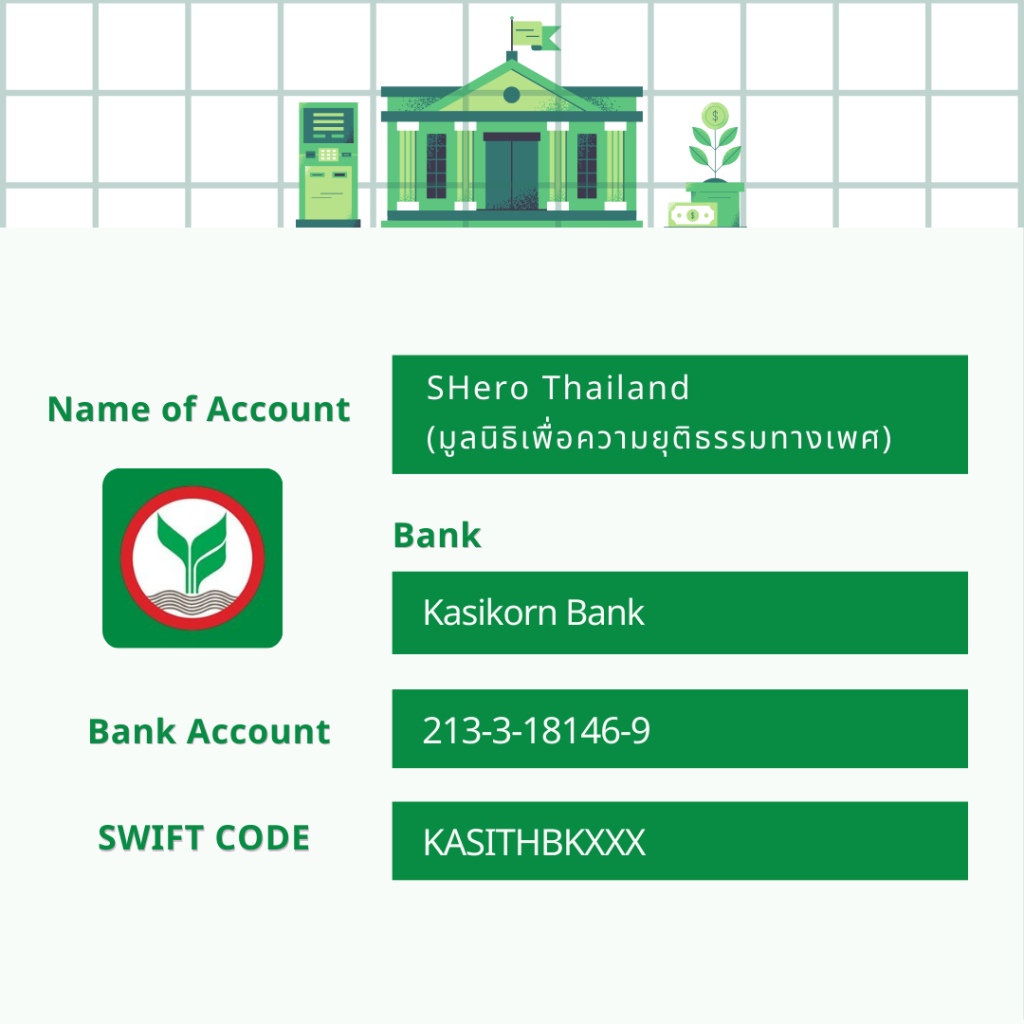
For those wishing to make a donation to support SHero Thailand’s vital work in providing legal aid to survivors of gender-based violence, we are currently accepting contributions through the Taejai platform. You can find further details and make your donation at https://taejai.com/th/d/shero_ot/
Reference
Corradi, C., Marcuello-Servós, C., Boira, S., & Weil, S. (2016). Theories of femicide and their significance for social research. Current Sociology, 64(7), 975–995. doi:10.1177/0011392115622256